Blackened, Fried, or Grilled? Choosing How to Order Your Grouper
August 30, 2026
Quick Answer: Blackened grouper gets a hard sear in Cajun spice for a smoky, peppery crust with a firm, juicy center. Fried grouper is dipped in batter or breading and cooked until the outside turns crisp and golden while the inside stays flaky and mild. Grilled grouper cooks over direct heat with little more than the fish itself, giving you the cleanest, lightest version of the flavor with light char on the outside. Grouper's thick, firm flake means it holds up well to all three, so the right choice comes down to how much spice, crunch, or simplicity you want on the plate. Want bold flavor? Order it blackened. Want crunch? Order it fried. Want the fish to speak for itself? Order it grilled.
Your menu opens to the seafood page and there it is: grouper, with three ways to have it. Blackened, fried, or grilled sounds like a simple choice until you realize each one turns the same fish into something almost unrecognizable next to the others. The spice level changes. The texture changes. Even the smell coming off the plate as it lands in front of you is different. Once you know what each style actually does to the fish, the decision gets a lot easier, and you walk away with the plate you actually wanted instead of the one you guessed at.
Here's what makes that possible in the first place: grouper can go any of these three directions without falling apart. A thinner, softer fillet gets pushed around by a hot skillet or a hard char. Grouper doesn't. Its dense, meaty flake holds its shape no matter which way it's cooked, which is the whole reason a Gulf-coast kitchen can put all three preparations on the same fish instead of steering you toward just one.
Blackened Grouper: Bold Spice and a Hard Sear
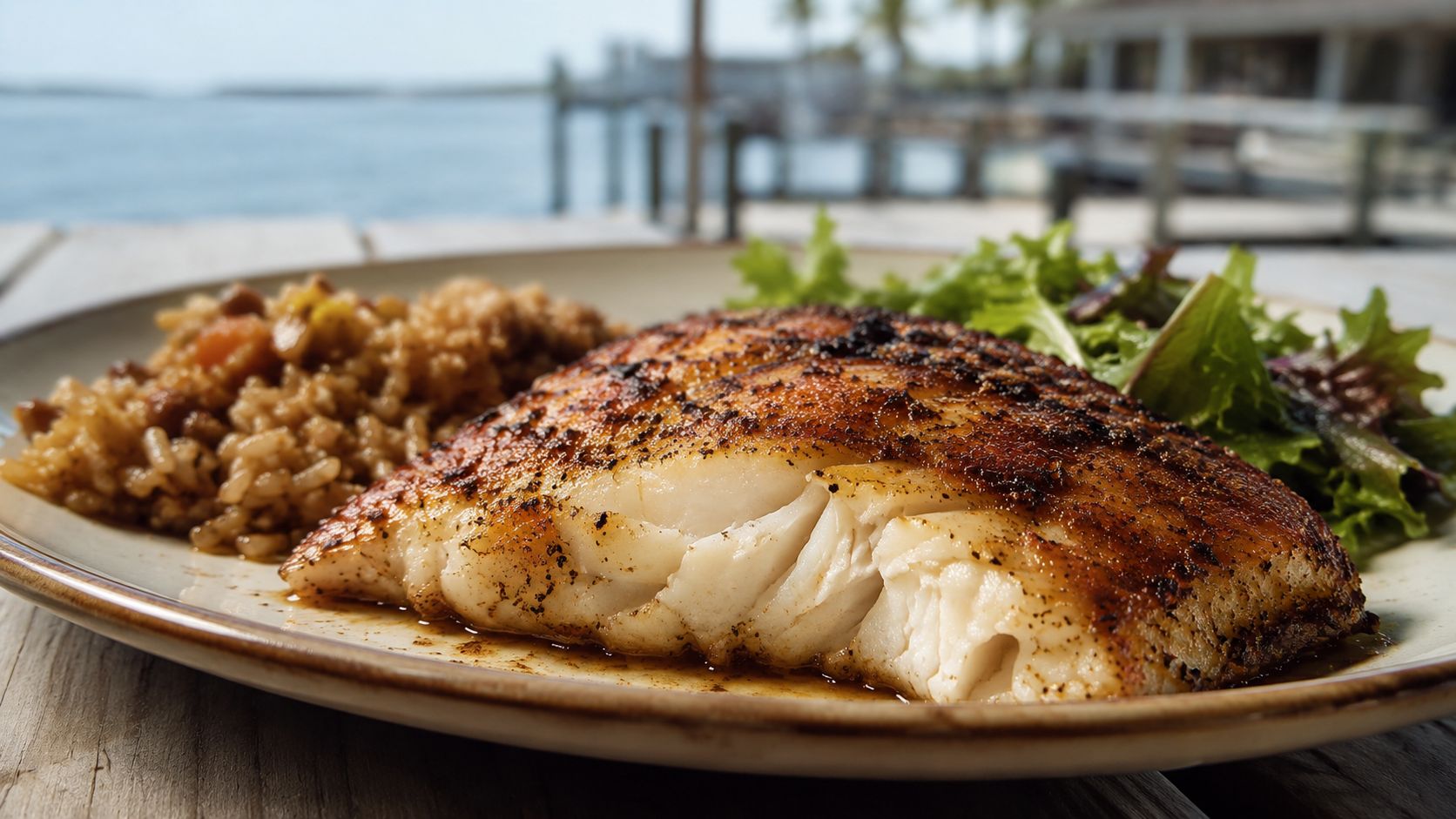
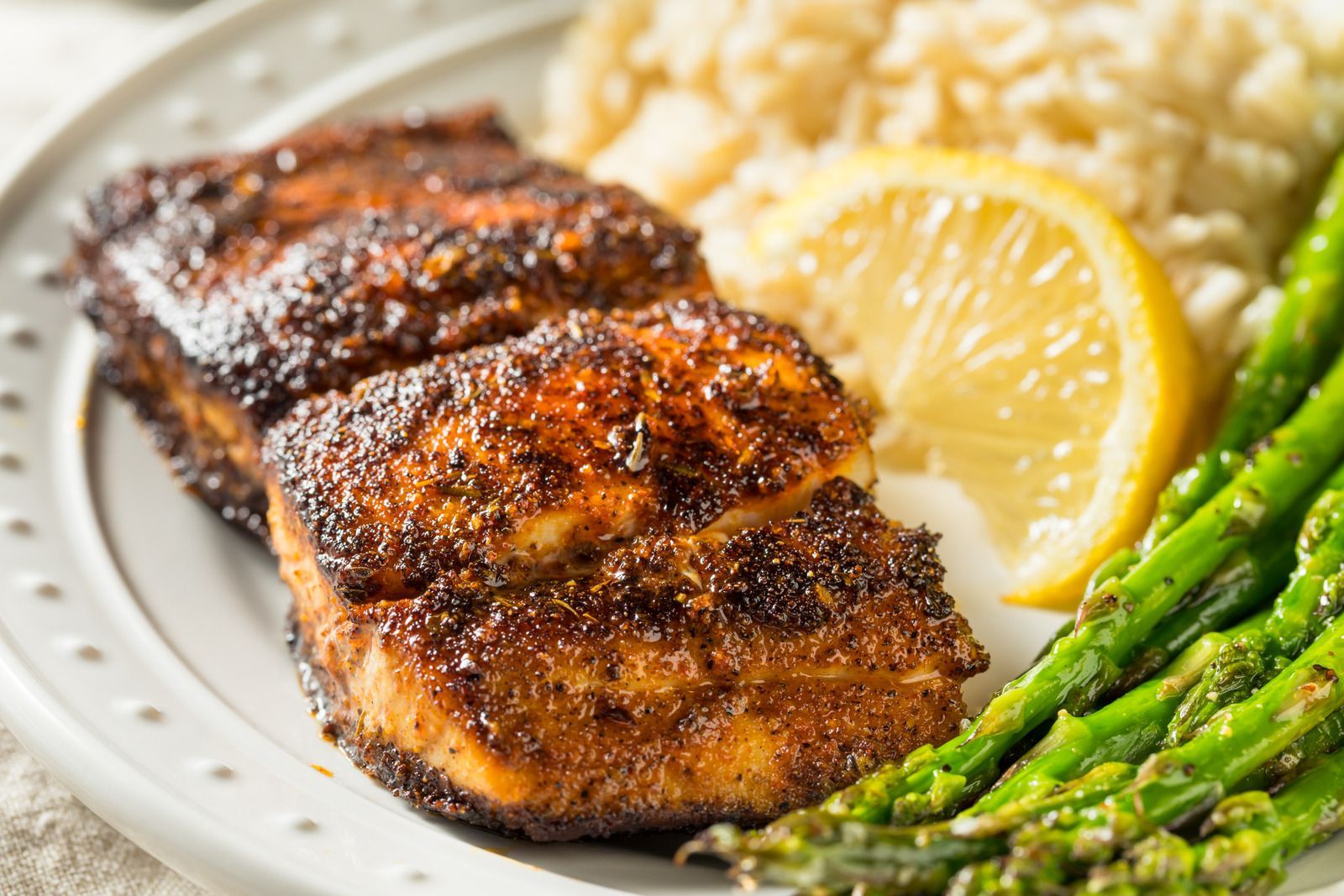
Blackening starts with a fillet coated heavily in a spice blend, usually a mix of paprika, cayenne, garlic, onion, and dried herbs, then dropped into a screaming-hot cast iron skillet, often with a pass of melted butter first. The heat scorches the spice rub almost instantly, building a dark, slightly charred crust while the inside of the fillet stays tender and moist. The technique came out of Louisiana kitchens decades ago and has stuck around as a go-to way to serve firm Gulf fish ever since.
The crust brings heat and smoke up front. Underneath it sits the clean, mild sweetness of the grouper. It's not a subtle plate. The pepper and char dominate the first bite, then fade into the background as the fish's own flavor takes over, and because the crust forms so fast over such intense heat, the center of the fillet barely cooks past done. That's part of why blackened grouper rarely dries out the way a longer cooking method can.
Order it blackened if you like your seafood to show up with some kick, or if you're used to spicy food and want the grouper to hold its own against the seasoning instead of hiding under it. It also does well with something cooling on the side, since that crust brings real heat with it.
Fried Grouper: Familiar and Comforting
Fried grouper usually starts with a light dredge, batter, or breading, then goes into hot oil until the coating turns golden and audibly crisp. Done right, the outside shatters a little when you cut into it while the fish underneath stays soft and almost steamed inside its own crust. The coating shields the fillet from direct heat, so frying tends to forgive small mistakes in a way blackening and grilling don't.
This is the most familiar version for a lot of diners, close cousin to the fried fish sandwiches and baskets found up and down the coast. Salt and crunch hit first. The grouper itself reads milder here than in the other two preparations, since the coating is doing a lot of the work, and that's exactly why it goes over so well with kids at the table or anyone who wants a plain, no-spice plate.
Fried is the pick when you want something hearty and familiar, especially in sandwich form on a toasted bun with a few crisp toppings. It also travels well for takeout. The coating holds its texture on the ride back to the campsite or the beach far better than a delicate grilled fillet does.
Grilled Grouper: Let the Fish Speak for Itself
Grilled grouper goes over direct heat with minimal seasoning, sometimes just a brush of butter or oil and a light dusting of salt and pepper. The high, dry heat of the grates gives the outside a bit of char and grill marks while the inside stays moist, thanks to grouper's naturally thick flake. There's nowhere for the fish to hide with this method. Whatever's under that light seasoning is what you get.
Grilled grouper is the cleanest, most direct version of the three. You taste the fish first, a light smokiness from the grill second, and not much else standing in the way. Firm and satisfying rather than crisp, it's closer to what most people picture when they hear "catch of the day."
Order it grilled on a hot Gulf-coast afternoon when a heavy, fried plate sounds like too much, or when you just want to taste the fish itself instead of a coating or a spice crust. It's also the easiest of the three to build a plate around, since it pairs with almost anything from rice to seasonal vegetables without competing for attention.
How to Decide Which Way to Order It
All three preparations start with the same grouper, so the real decision comes down to what kind of meal you're after that day. Craving a little fire? Blackened wins. Want something crisp and familiar instead? Fried does the job. And if the sun's already worn you out by lunchtime, grilled is the easier plate to finish.
A table with different tastes doesn't have to agree on one preparation, either. Order a mix. Blackened for the one who wants spice, fried for the kid who wants a sandwich, grilled for whoever's had enough of the heat outside, and everybody still gets grouper off the same menu.
The season nudges the decision too. Summer heat on the Forgotten Coast tends to push people toward the lighter grilled plate, while cooler months and rainy afternoons make the rich, spiced blackened version or a warm fried basket sound better. Neither is wrong. It's just a matter of what fits the day.
Tip: If you can't decide, ask which preparation the kitchen is running best that day. A cook who just pulled a fresh batch of fillets usually has a read on which style is showing off that particular catch.
What Actually Ruins a Grouper Plate
Overcooking, not the method, is the real risk here. Any of the three preparations can go dry if the fillet sits over heat too long, and grouper is lean enough that a few extra minutes past done pulls the moisture right out of it. Blackened, fried, or grilled, the goal underneath the technique is the same: a hot, fast cook that gets the outside where it needs to be without pushing the inside past tender.
Warning: If a grouper fillet arrives chalky, stringy, or dry no matter which preparation you ordered, that's almost always a sign it sat too long over heat rather than a problem with the fish itself. Worth mentioning to your server so the kitchen knows.
Sauce and sides shift the balance more than people expect. A remoulade or tartar sauce can soften the heat of a blackened plate or add richness to a grilled one, and a squeeze of lemon tends to brighten a fried plate without covering up the crunch. Small additions like that can nudge any of the three preparations toward exactly what you're after.
Pairing Your Plate
Blackened grouper leans well toward dirty rice or collard greens, something with enough substance to stand up to the spice. Fried grouper pairs naturally with coleslaw, hush puppies, or a basket of fries for a full comfort-food spread. Grilled grouper is the most flexible of the three, sitting easily next to seasonal vegetables, a light rice pilaf, or a simple salad, especially on a hot afternoon when a heavier plate isn't what you want.
Frequently Asked Questions
Which grouper preparation is most traditional on the Gulf Coast?
Blackened and fried are the two most associated with Gulf cooking, though all three show up regularly on coastal menus. Grilled has become more common over the years as a lighter alternative, but none of the three is more "correct" than the others.
Does blackened grouper always come out spicy?
There's real heat in a blackening seasoning built on paprika and cayenne, though how much depends on the spice blend used. Ask how the kitchen builds its blackening seasoning before you order if you're sensitive to spice.
What's the texture difference between fried and blackened grouper?
Fried grouper has a crisp outer coating protecting a soft, almost steamed interior, while blackened grouper carries a dry, charred spice crust directly on the fish with a firmer bite all the way through. Both keep the inside moist, just by different routes.
Which preparation works best for a grouper sandwich?
Fried and blackened both hold up well on a bun, since the crust or coating stands up to bread and toppings. Grilled grouper also makes a good sandwich if you want something lighter without breading.
Can I order grouper with only light seasoning?
Grilled grouper is the lightest-seasoned of the three, usually finished with little more than salt, pepper, and a touch of butter, so the fish itself carries the plate.
Does the preparation change how fresh the grouper needs to be?
Freshness matters across all three, but grilled and blackened expose more of the fish's natural texture and flavor. Any softness or off-notes are easier to notice under either one than under a fried coating.
Three Grouper Styles for Every Coastal Craving
Blackened, fried, and grilled grouper each bring something different to the table, but the best choice depends on the kind of meal you want. Blackened delivers a smoky crust and noticeable spice, fried adds golden crunch and familiar comfort, while grilled keeps things simple and lets grouper’s mild flavor stand forward. Because grouper has a firm, substantial texture, it handles each cooking method beautifully without losing its character. That versatility is part of what keeps this Gulf favorite on coastal menus year-round.
At Seabreeze Cafe
in Panacea, FL, 10
years of experience have shaped an understanding of how preparation can completely change the experience of the same fish. Some days call for the bold seasoning of blackened grouper, while others suit the satisfying crunch of fried or the clean simplicity of grilled. There is no single preparation that works for everyone or every occasion. The right plate is simply the one that matches your appetite, your preferred texture, and the flavors that sound best that day.